
Glen Burnie Tree Removal handles land clearing and lot clearing in Glen Burnie, MD, serving surrounding cities including Pasadena, Brooklyn Park, Linthicum, Severn and Severna Park. Twenty years of clearing lots in Anne Arundel County means we start with the regulatory question rather than the machine question, because on a Maryland site the paperwork decides the schedule far more often than the trees do.
Clearing is not one job. Taking a quarter-acre back lot from thicket to usable yard is a different operation from clearing a building envelope ahead of a grading permit, and both are different from selective clearing that has to leave specified trees standing and undamaged. The scope, the equipment and the review each one triggers are not interchangeable, so the first visit establishes which of them you actually need.
The regulatory line here is specific. Anne Arundel County forest conservation requirements attach at a subdivision, a grading permit or a sediment control permit on a site of 40,000 square feet or more, under Article 17 Subtitle 3, and the Chesapeake Bay Critical Area adds a separate and stricter regime on any parcel inside the 1,000-foot tidal band. We establish which apply to your parcel before anything is quoted.
Types of Clearing We Perform
Residential Lot and Back-Yard Clearing
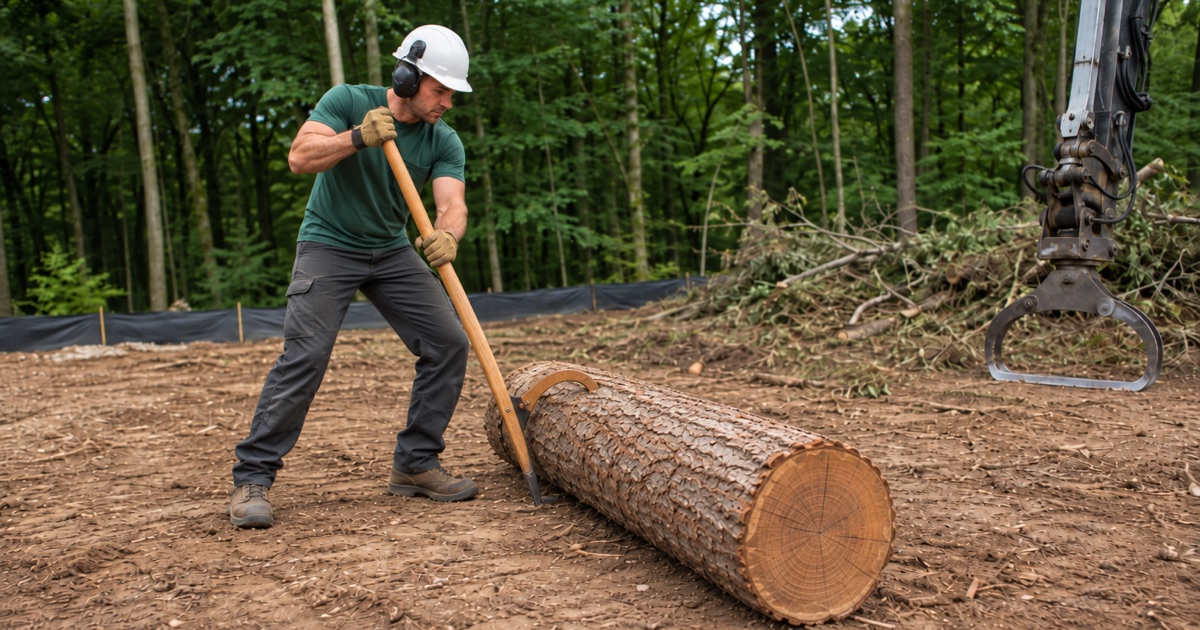
The most common request is a residential lot that has gone back to thicket: volunteer saplings, brambles, invasive shrubs and a few real trees inside it. We cut and chip on site, take out the stumps of anything that would resprout, and leave a defined edge rather than a ragged transition. Most of these sites fall well under the forest conservation threshold, which makes them straightforward.
Building Pad and Construction Clearing
Clearing ahead of a build works to an approved plan and to marked limits of disturbance. We clear the envelope, protect what the plan requires to remain, and stage the wood and brush so the sediment controls stay functional. Getting this wrong is expensive in a way that has nothing to do with trees: a violation stops the whole project, not just the clearing.
Selective Clearing and Tree Retention
Selective clearing is the harder discipline, because the trees that stay have to survive the ones that leave. Root systems extend well past the canopy and machinery compacting soil inside a retained tree’s root zone kills it two or three years later, long after anyone connects the two events. We fence root zones, plan the machine routes around them, and fell away from retained stems.
Fence Lines, Easements and Sight Lines
Smaller clearing jobs are frequently about a line rather than an area: an overgrown fence line, a utility easement that has to stay passable, a driveway sight line, or a property boundary that nobody can find any more. These are quick, they are priced by length rather than acreage, and they are the jobs where knowing exactly where the property line runs matters most.
Permits, Forest Conservation and the Critical Area
When Forest Conservation Review Attaches
In Anne Arundel County, forest conservation requirements attach at a subdivision, grading permit or sediment control permit on a site of 40,000 square feet or more. Below that threshold and without one of those triggers, an ordinary residential clearing job generally does not enter the program at all. Knowing which side of the line your parcel sits on is the first thing to settle, and it is free to establish.
Declarations of Intent and Exemptions
The Maryland Forest Conservation Act provides for a declaration of intent, a recorded commitment about what will and will not happen on a property within a forward-looking window, as a route to exemption in defined circumstances. It is a genuine mechanism rather than a loophole, and it carries real obligations for years afterward. We flag when it may be relevant and refer the filing to the county program rather than guessing at eligibility.
Clearing Inside the Chesapeake Bay Critical Area
Inside the Critical Area buffer the rules change completely. An approved Vegetation Management Plan is required before vegetation is removed, dead material included, and the county has stated that the widely believed exemption for small stems does not exist. A pre-1985 half-acre Critical Area lot carries a 6,534 square foot clearing cap with mitigation at 1.5 times the area cleared, so the plan has to be built before the machines are booked.
Specimen Trees and Diameter at Breast Height
Where a forest conservation plan applies, individual large trees carry their own retention requirements, measured by diameter at breast height rather than by height or canopy spread. The specific threshold is set by the jurisdiction the parcel sits in, so we measure and record diameters during the walk-through rather than assuming a number from a neighboring county.
Equipment, Access and Site Conditions
Machine Access and Staging
Access is what sets the price on most Glen Burnie parcels. Eighth-acre and quarter-acre residential lots dominate the community and the route in is frequently a side gate or a shared drive, which decides the machine size before anything else does. Where the wood cannot come out the way it went in, chipping on site and hauling chips is usually cheaper than a larger machine and a removed fence.
Soils, Ruts and Wet Ground
Most of Glen Burnie sits on deep, loose, well-draining Patapsco sand, which carries equipment well. But poorly drained Fallsington pockets exist inside that otherwise sandy community, and a loaded truck crossing one leaves ruts that outlast the project. We mat the haul route and stage on the firm ground rather than restoring a lawn afterward at your cost.
Invasive Species and Regrowth
Clearing an area of tree of heaven, brambles or other root-suckering species without treating the cut stems produces a thicker stand within two seasons than the one you paid to remove. Tree of heaven in particular is the preferred host of spotted lanternfly and resprouts aggressively from the root system. We treat cut stumps as part of the clearing rather than selling the regrowth back to you later.
Wood, Chips and Hauling
Anne Arundel County curbside collection does not take logs and takes limbs only under 4 feet by 4 inches in bundles under 40 pounds, so hauling is genuinely part of a clearing job here. We chip brush on site, and the written scope states whether logs leave the property, get cut to stove length and stacked, or stay in rounds for you to deal with.
Our Step-by-Step Land Clearing Process
Walk the Site and Establish the Regulatory Path
We walk the parcel with you, mark what stays and what goes, measure diameters where they may matter, and establish whether forest conservation review, a Critical Area Vegetation Management Plan or a roadside tree permit applies. Nothing is quoted until that is settled, because it is the single largest variable in the schedule.
Written Scope and Marked Limits
The estimate names the area, the retained trees, the stump treatment, the debris disposition and the finished condition of the ground. Retained trees and limits of disturbance are physically marked on site, so the crew is working to the same boundary the plan describes rather than to a description of it.
Utility Locate and Protection
Every clearing job goes through Maryland’s Miss Utility one-call service before machinery moves, and root protection fencing goes up around retained trees and along the sediment controls. Made ground and fill are common here, and buried debris under an old fence line or a filled area is a routine find rather than a surprise.
Clear, Chip and Treat
Felling runs away from retained stems and structures, brush is chipped as it is cut so the site never accumulates a pile, and stumps of resprouting species are treated at the cut. Working in that order keeps the site passable throughout and keeps the sediment controls doing their job.
Grade, Clean and Hand Back
We grind or remove stumps to the agreed depth, rake and remove residual debris, and leave the ground at the condition the scope named — seeded, rough-graded or simply cleared. You get a walk-through at the end against the same written scope the job started from.
- 20+ Years in Anne Arundel
- Free Written Estimates
- 24-Hour Storm Response